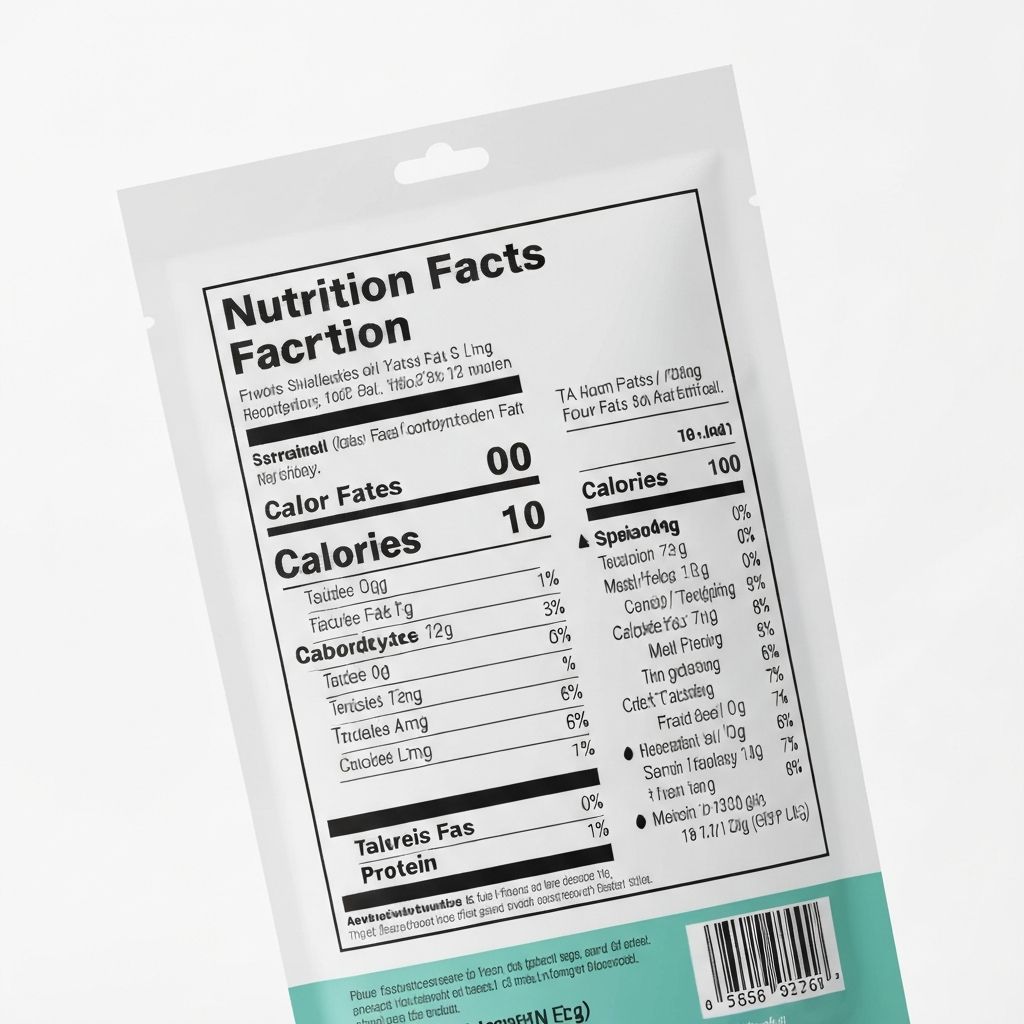
Starting a food business or selling homemade products? One of the most common questions entrepreneurs face is whether their products need a nutrition facts label. The answer depends on your business size, sales channels, and whether you make any health claims.
The General Rule: Most Packaged Foods Require Labels
Under the Nutrition Labeling and Education Act (NLEA), most packaged foods sold in the United States must bear nutrition labeling. The FDA requires this information to help consumers make informed dietary choices.
The standard nutrition facts panel must include serving size, calories, total fat, saturated fat, trans fat, cholesterol, sodium, total carbohydrates, dietary fiber, total sugars, added sugars, protein, vitamin D, calcium, iron, and potassium.
Who is Exempt from Nutrition Labeling?
Not everyone needs to include nutrition facts on their products. The FDA provides several exemptions that may apply to your business.
FDA Labeling Exemptions
Small Business Exemption
Businesses with less than $500,000 in annual gross sales OR less than $50,000 in food sales to consumers may qualify.
- Direct sales to consumers
- No nutrition claims made
- Must file exemption notice with FDA
Low-Volume Products
Products with insignificant amounts of all required nutrients may use a simplified format or be exempt.
- Plain coffee and tea
- Most spices and flavourings
- Bottled water
Farmers Markets & Direct Sales
Foods sold at farmers markets, roadside stands, and similar venues may qualify for exemptions.
- Raw agricultural products
- Food prepared on-site
- Cottage food products (varies by state)
Other Exempt Products
Several product categories are exempt from standard labeling requirements.
- Food sold in bulk (not pre-packaged)
- Restaurant and deli foods
- Food for immediate consumption
When You Lose Your Exemption
Even if your business qualifies for an exemption, certain actions will require you to add nutrition facts to your products:
Actions That Require Nutrition Labeling
- Making nutrition claims like "low fat," "high protein," "sugar-free," or "good source of fiber"
- Making health claims linking nutrients to disease prevention
- Selling products through retailers or distributors rather than directly to consumers
- Exceeding the sales thresholds for small business exemption
Cottage Food Laws: State-by-State Variations
If you make food at home and sell directly to consumers, cottage food laws in your state determine labeling requirements. These laws vary significantly:
- Some states require only basic information like product name, ingredients, allergens, and contact details
- Other states have stricter requirements or limit what products can be sold
- Sales limits range from $25,000 to unlimited depending on your state
Always check your state's specific cottage food regulations before starting a home-based food business. Your state's department of agriculture or health department website will have current requirements.
How to Get Nutrition Facts for Your Product
If you determine that your product requires nutrition labeling, you have several options:
- Laboratory Analysis - Send samples to an FDA-registered lab for testing (most accurate but expensive, $100-500+ per product)
- Nutrition Software - Use FDA-compliant software to calculate nutrition based on your recipe ingredients
- Database Calculation - Calculate using USDA FoodData Central database values for each ingredient
- Hire a Consultant - Food scientists and regulatory consultants can create compliant labels
For accuracy and macro calculations, laboratory testing is the gold standard. However, software-based calculations are acceptable for most products when done correctly.
Required Elements on a Nutrition Facts Label
If you need to include nutrition facts, your label must follow the FDA's specific format requirements:
| Required Element | Details |
|---|---|
| Serving Size | Based on RACC (Reference Amounts Customarily Consumed) |
| Calories | Total calories per serving, displayed prominently |
| Fats | Total fat, saturated fat, trans fat (in grams) |
| Cholesterol & Sodium | Listed in milligrams with % Daily Value |
| Carbohydrates | Total carbs, dietary fiber, total sugars, added sugars |
| Protein | Listed in grams |
| Vitamins & Minerals | Vitamin D, calcium, iron, potassium (required) |
| % Daily Value | Based on 2,000 calorie diet reference |
Tips for Food Entrepreneurs
Whether you need a nutrition label or not, following these best practices will help your food business succeed:
- Document everything - Keep detailed records of recipes, ingredients, and suppliers
- Check allergens - Major allergens must be declared regardless of exemption status
- Stay informed - Regulations change; subscribe to FDA updates for your industry
- Consider voluntary labeling - Even if exempt, providing nutrition info can build customer trust
- Plan for growth - If you expect to exceed exemption thresholds, prepare labeling in advance
Understanding your caloric and nutritional content is valuable even if labeling isn't required. Use our TDEE calculator to understand daily energy needs, or explore restaurant nutrition calculators to see how other food businesses present their nutrition information.
Frequently Asked Questions
Do I need nutrition facts if I sell online?
Yes, if you sell packaged food products online and ship them to consumers, you generally need nutrition labeling unless you qualify for the small business exemption. Online sales count toward your annual sales totals for exemption calculations.
What about selling at craft fairs or pop-up events?
Foods sold directly to consumers at temporary events may be exempt under cottage food laws or the small business exemption. However, you must still list major allergens and cannot make nutrition claims without a label.
Do beverages require nutrition facts?
Most packaged beverages require nutrition labeling. Exceptions include plain bottled water, coffee, tea, and some dietary supplements. Alcoholic beverages are regulated by TTB rather than FDA and have different requirements.
Can I estimate nutrition values or must I test?
You can calculate nutrition values using reliable databases like USDA FoodData Central, but you are responsible for accuracy. For products with variable ingredients or proprietary formulations, laboratory testing provides more reliable results.