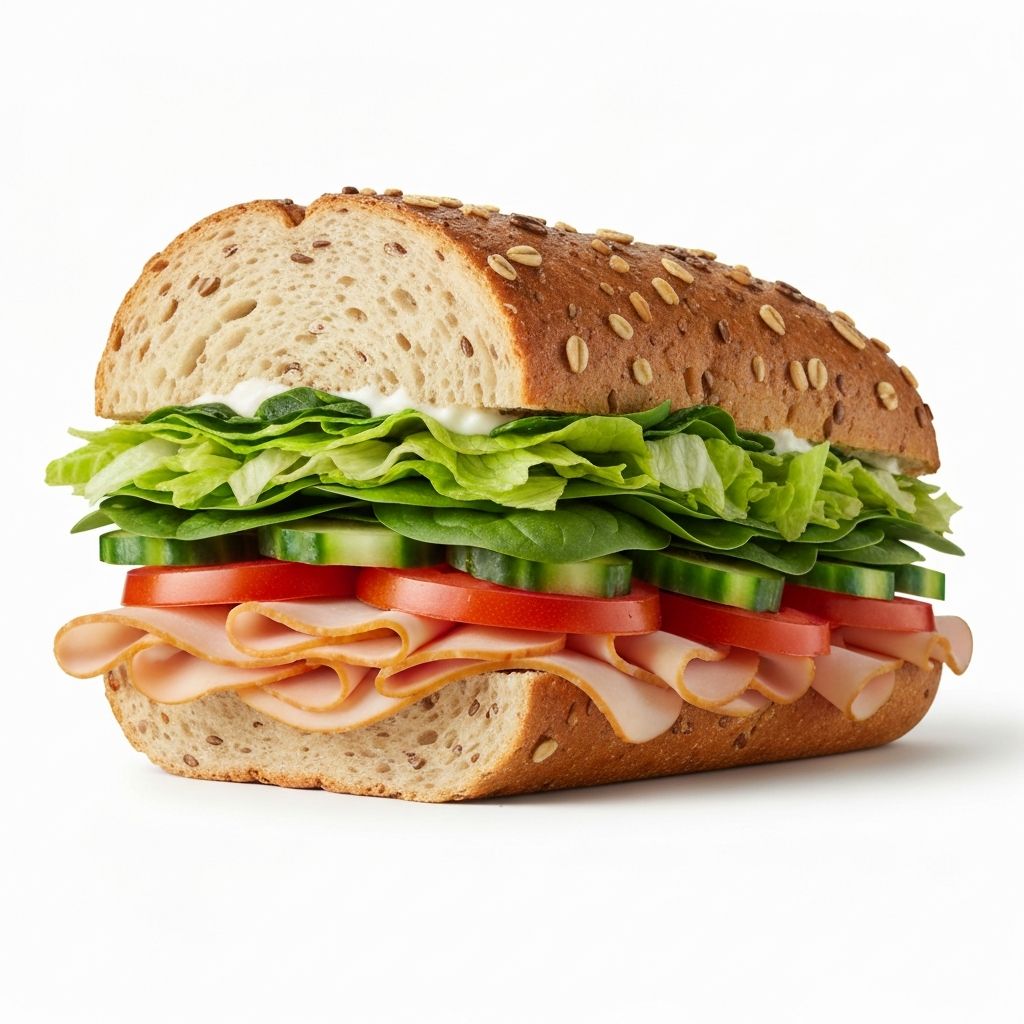
Subway is known for its wide range of breads, proteins, and toppings, making it easy to create a meal that suits any preference. But with so many choices, it's not always clear which options actually qualify as "healthy."
The truth is, the health value of a Subway sandwich depends on how you build it. A few simple choices—like lean protein, high-fiber bread, and lighter sauces—can turn your meal into a balanced option instead of a calorie-heavy one. This guide breaks down the healthiest Subway sandwiches and shows how to make smart adjustments that fit your nutrition goals.
What Makes a Sandwich "Healthy" at Subway?
At Subway, almost every sandwich can be built in multiple ways. What makes it "healthy" comes down to a few clear factors:
- Calories: A 6-inch sandwich is usually a better choice than a footlong if you want to keep calories under control.
- Protein: Lean proteins like turkey, chicken, or ham add filling power without excess fat.
- Fiber: Whole-grain or multigrain bread boosts fiber, which helps with satiety.
- Sodium: Many meats and sauces carry high sodium. Watching portion sizes is key.
- Balance: The healthiest sandwiches include protein, vegetables, and the right bread—not just one or two of these elements.
By understanding these factors, you can evaluate each option more effectively instead of just relying on "low-calorie" claims.
Top 6 Healthiest Subway Sandwiches
Here are some of the best picks if you want a balanced meal at Subway. Nutrition values are for a 6-inch sandwich on 9-Grain Wheat without extra sauces or cheese.
1. Veggie Delite
About 200 calories
Low fat, high in fiber, packed with fresh vegetables. The lightest option on the menu.
2. Oven Roasted Turkey
Around 280 calories
Lean protein with a clean taste, pairs well with any veggies.
3. Rotisserie-Style Chicken
About 300 calories
High protein, lower sodium compared to other meats, great for satiety.
4. Black Forest Ham
Around 290 calories
Lean cut, simple but filling, benefits from veggie load.
5. Subway Club (Turkey, Ham, Roast Beef)
About 310 calories
Mix of proteins with decent variety, still relatively low in fat.
6. Tuna (with light modifications)
Around 350-400 calories with adjustments
Standard recipe is higher in fat due to mayo, but asking for less tuna salad makes it more balanced.
These sandwiches serve as a strong base. Adding fresh veggies and keeping sauces light helps maintain balance.
Bread Choices That Improve Nutrition
The bread you choose at Subway can change the calorie and fiber count of your meal. Here's a breakdown:
| Bread Type | Calories | Notes |
|---|---|---|
| 9-Grain Wheat | ~210 | Higher in fiber, steady energy release |
| Multigrain | ~210 | Similar to wheat, more whole grains |
| Italian (White) | ~200 | Softer texture, lower in fiber |
| Flatbread | ~230 | Denser, chewier texture |
| Wraps | ~300 | Higher calories, often less fiber |
Choosing wheat or multigrain bread makes the biggest difference for staying full longer. Pairing that with lean protein and plenty of veggies builds a stronger nutritional profile.
Smart Topping Choices
Toppings at Subway can take a healthy sandwich and make it either better or worse. The key is knowing which ones add nutrition without piling on excess calories.
- Best Veggie Additions: Spinach, lettuce, cucumbers, tomatoes, bell peppers, and onions add bulk, vitamins, and fiber with almost no calories.
- Cheese Options: Skipping cheese saves about 50-70 calories per slice. If you want it, go for Swiss or provolone as lighter picks.
- Sauce Swaps: Choose mustard, vinegar, or hot sauce for flavor with very low calories. Limit mayo, ranch, or chipotle southwest sauce since they add 100+ calories each.
- Extra Protein: Adding double meat increases protein but also raises sodium. Best used when you need a more filling option.
Small swaps here make a big difference. A lean protein sandwich with veggies and light sauce will always outperform one loaded with creamy dressings and cheese.
Using the Subway Nutrition Calculator
The Subway Nutrition Calculator is a helpful tool to check exactly what's in your sandwich before you order. It breaks down calories, protein, fat, fiber, sugar, and sodium for every possible combination.
For example:
- Oven Roasted Turkey on 9-Grain Wheat with veggies and mustard - about 280 calories, 18g protein.
- Same sandwich with mayo and cheese added - closer to 420 calories, higher fat content.
This shows how a single topping can change the balance of your meal. By testing builds in the calculator, you can:
- Compare bread choices side by side.
- Adjust protein portions to fit your goals.
- Spot high-sodium or high-calorie add-ons before they sneak in.
Using this tool lets you design a sandwich that matches your needs instead of guessing at the counter.
Mistakes to Avoid When Building a Subway Sandwich
Even healthy menu items can lose balance if built the wrong way. These are common mistakes to watch for:
- Overloading Sauces: Creamy dressings can double the calorie count. Stick to one light sauce instead of mixing several.
- Too Much Cheese: Adding extra slices or double cheese pushes fat and sodium up quickly.
- Skipping Vegetables: A sandwich without veggies lacks fiber and micronutrients that help with fullness.
- Footlong by Default: A 12-inch may sound tempting, but a 6-inch often satisfies hunger with half the calories.
- Ignoring Sodium: Processed meats and certain sauces are high in sodium. Combining too many can push levels beyond daily needs.
Avoiding these traps makes it easier to keep your Subway order both satisfying and nutritious.
Sample Orders for Different Goals
Not every Subway order works for everyone. These examples show how you can build a sandwich to fit specific needs:
High-Protein Meal
- Rotisserie-Style Chicken on 9-Grain Wheat
- Load with spinach, peppers, cucumbers, onions
- Mustard or vinegar as sauce
- Around 320 calories, 25g+ protein
Low-Calorie Option
- Veggie Delite on Multigrain
- Extra veggies for volume
- Skip cheese, add mustard
- About 200-230 calories
Balanced Everyday Lunch
- Oven Roasted Turkey on Wheat
- Add lettuce, tomato, onion, green peppers
- One slice provolone, light vinaigrette
- Around 320-350 calories, good protein-fiber mix
Vegetarian-Friendly Choice
- Veggie Delite with avocado on Wheat
- Add all veggies for crunch and nutrients
- Oil & vinegar or sweet onion sauce in moderation
- Around 280-300 calories
By mixing bread, protein, veggies, and sauce with intention, you can meet your nutrition target without giving up flavor.
Conclusion
Subway offers flexibility, which means your meal can be as healthy—or as heavy—as you make it. Choosing lean proteins, fiber-rich bread, and plenty of vegetables creates a sandwich that fits most nutrition goals. Watching portions of cheese and sauces keeps calories in check without losing flavor.
Tools like the Subway Nutrition Calculator make it easier to test different builds before you order, so you know exactly what works for you. The healthiest Subway sandwich is not the same for everyone—it's the one that balances taste and nutrition in a way that matches your lifestyle.
Related Calculators
For more information about healthy eating and nutrition guidelines, visit the Wikipedia article on Healthy Diet.